THE COLOR LEFT BEHIND

STORY
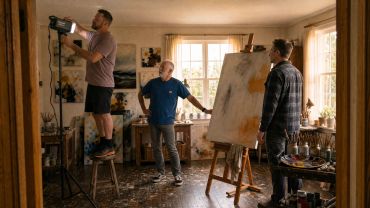
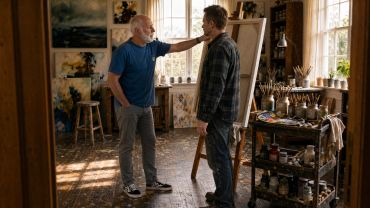
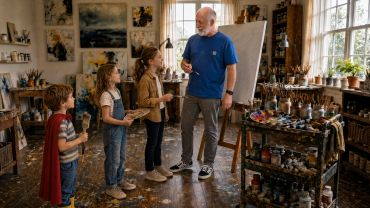
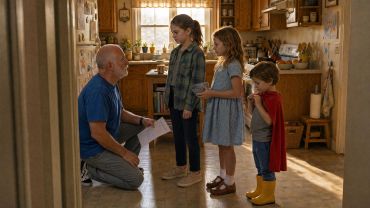
After the death of his wife, a grieving father struggles to raise his three children while abandoning the art they once shared as a family. When the children unknowingly transform a blank canvas with their own colorful handprints, they inspire him to paint again. As grief slowly gives way to healing, one final masterpiece reveals that the love we leave behind never truly disappears—it simply changes shape.

2026 PCS Scriptwriting Competition Winner
“The Color Left Behind” was selected as one of ten winning scripts in Access Sacramento’s 2026 A Place Called Sacramento Scriptwriting Competition.
Director Statement
I've always believed that the most meaningful stories aren't the loudest ones—they're the quiet moments that remind us who we are and what matters most.
The Color Left Behind was inspired by a close friend whose wife passed away from cancer, leaving him to raise their three children. Watching his family face unimaginable loss with courage, love, and even moments of unexpected humor reminded me that while grief changes us, it doesn't erase the people we love. They remain present in the lives they shaped, the memories they created, and the pieces of themselves they leave behind.
That idea became the heart of this film.
I didn't want to make a story about loss. I wanted to make a story about love, resilience, creativity, and the remarkable ways families find hope again. Art became the perfect metaphor because every brushstroke represents a memory, every color represents a life shared, and together they create something far more beautiful than any one person could create alone.
As a filmmaker, I'm drawn to stories that make us laugh, cry, reflect, and see one another with a little more compassion. My hope is that audiences recognize a piece of their own lives in this family—whether they've experienced profound loss, celebrated unconditional love, or simply been reminded that the people who shape our lives continue to influence us long after they're gone.
If audiences leave the theater thinking about someone they love, calling a family member they haven't spoken to in a while, or seeing hope where they once saw only loss, then The Color Left Behind has accomplished exactly what I hoped it would.
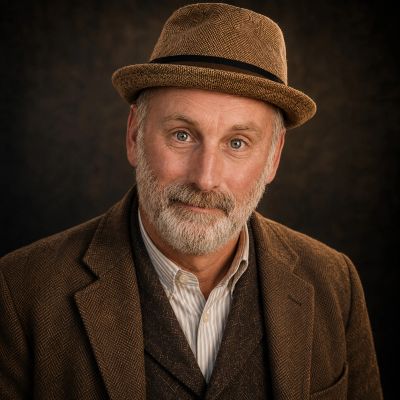
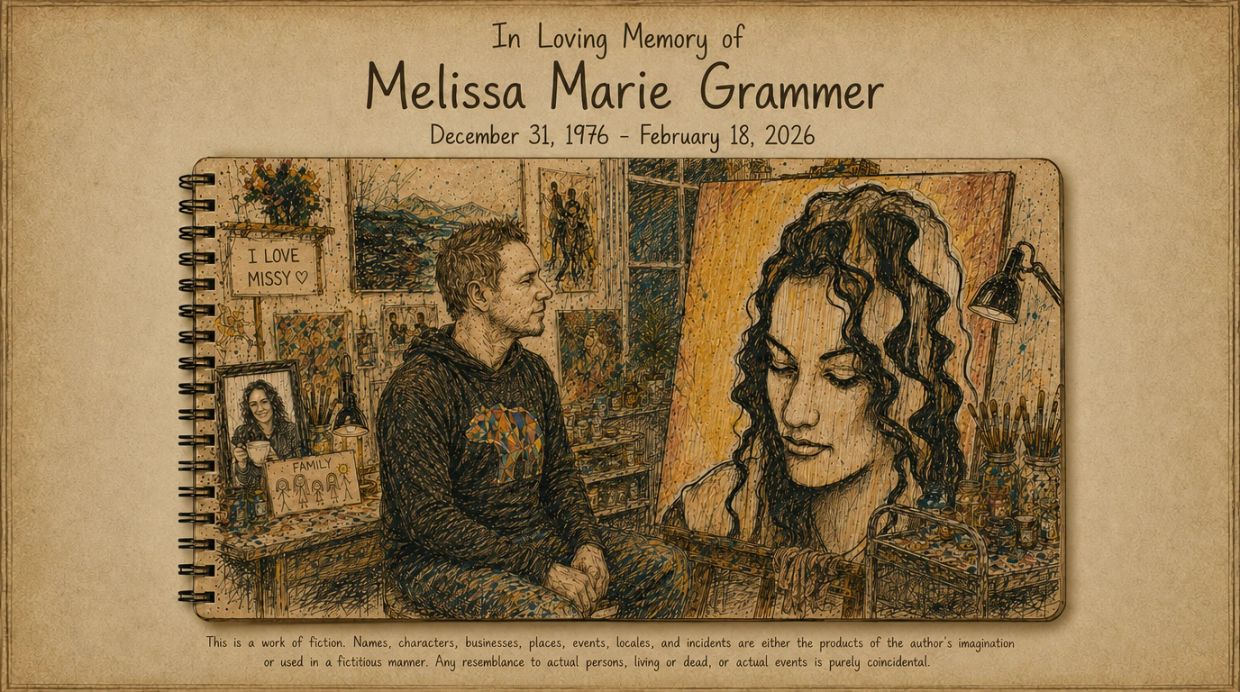
The story was inspired by artist Shane Grammer and the loss of his wife, Missy, to cancer.
See Shane's artwork at: shanegrammer.com
Article printed discussing "Why I Chose AI to Tell My Story"
by Rob Gore
My journey as a filmmaker began nearly five decades ago.
In 1978, I entered my first film festival with a movie I had shot on 8mm film. Every edit was made by hand with a razor blade and film splicing tape. There was no "Undo" button. If I wanted to change a scene, I literally cut the film apart and taped it back together.
Looking back, it's remarkable how much filmmaking has changed since then.
I've watched the industry evolve from film to videotape, from digital tape to hard drives, and from linear editing to Avid, Adobe Premiere, and Final Cut Pro. I spent years as a college professor teaching those technologies to hundreds of aspiring filmmakers, encouraging them to embrace new tools while never losing sight of why we make films in the first place.
The technology has changed dramatically.
The reason I make films never has.
I've worked on hundreds of productions as a producer, director, screenwriter, production designer, actor, editor, and just about every other job on a film set. Whether I'm behind the camera or in the editing room, my goal has always been the same: tell a story that makes people laugh, cry, reflect, or simply feel something they didn't feel before.
That's why some people may be surprised that my latest film, The Color Left Behind, was created using artificial intelligence instead of traditional live-action filmmaking.
The truth is, I never set out to make an AI film.
Like every project I've produced, I began planning a traditional production. I was scouting locations, building cast and crew lists, and preparing for this year's A Place Called Sacramento Film Festival. But as pre-production moved forward, I found myself facing the challenge every independent filmmaker knows well: compromise.
The locations weren't exactly what I had envisioned. My lead character, Jack, is inspired by a close friend, and I wanted an actor who could capture his quiet strength and humanity. I also needed three children who could convincingly carry the emotional heart of the story. Within the time, budget, and resources available, I realized I would have to make creative compromises before the cameras even started rolling.
At first, I began researching AI for one simple reason. I wondered if it could help me create a few visual effects.
What I discovered surprised me.
The technology had advanced far beyond what I expected. For the first time, I saw the possibility of creating the film I had imagined when I wrote the screenplay, rather than the film I could afford to produce.
So I did what filmmakers have always done when confronted with new technology.
I learned.
And it was far more challenging than I ever expected.
There's a common misconception that AI filmmaking is simply typing a prompt and pressing a button. My experience couldn't have been more different. Every character had to be designed. Every location had to be created. Every shot required planning, revisions, and countless creative decisions. Continuity had to be maintained from scene to scene. Sound, editing, pacing, composition, and emotion still mattered.
In many ways, I relied on nearly five decades of filmmaking experience more than ever before.
The technology generated images, but it didn't direct the film.
It didn't produce it.
It didn't edit it.
It didn't decide where to place the camera, how to build emotional tension, or how to tell a story.
Those decisions were still mine.
The Color Left Behind is one of the most personal stories I've ever written. It is inspired by a close friend who lost his wife to cancer far too young. He is an artist, and over the years we've encouraged one another through the struggles that every creative person experiences. Watching him continue raising three daughters while somehow finding the strength to keep creating his art left a lasting impression on me.
I wanted to tell a story about grief, hope, family, and the quiet ways people help one another heal. In my screenplay, I made the children younger because I believed it made the emotional journey even more profound. Each child helps their father rediscover his purpose, reminding him—and perhaps reminding all of us—that healing often comes from the people standing closest to us.
I wanted the visuals to be as emotionally honest as the story itself. For me, AI became another filmmaking tool that helped me move closer to that vision.
That doesn't mean I believe AI should replace people.
I hope it never replaces the joy of a traditional film set. There is something magical about actors, artists, technicians, and craftspeople coming together to create something none of them could accomplish alone. I've spent much of my life working alongside those talented people, and I treasure that collaboration.
But I also believe AI can open new doors for independent filmmakers.
Too many meaningful stories never reach the screen because of limited budgets, unavailable locations, impossible schedules, or resources that simply don't exist. If AI helps storytellers overcome some of those obstacles, then I believe it has earned a place in the filmmaker's toolbox.
Just as digital editing didn't replace storytelling, AI won't replace storytelling.
It's simply another tool.
A Place Called Sacramento has always celebrated stories. It begins with a screenplay—with an idea worth sharing. My screenplay was honored as one of this year's selected projects, and I felt a responsibility to tell that story in the strongest way I knew how.
Some viewers may embrace my approach. Others may question whether an AI-generated film is "real filmmaking." I respect those conversations because every major technological shift in filmmaking has sparked similar debates. I've lived through many of those changes, and one lesson has remained constant.
The tools will continue to evolve.
The responsibility of the filmmaker will not.
Our job is to tell stories that matter.
My hope is that when audiences watch The Color Left Behind, they won't leave talking about artificial intelligence.
They'll leave thinking about Jack, his children, and the people in their own lives who taught them to keep showing up.
If that happens, then the technology will have done exactly what every filmmaking tool should do.
It will quietly disappear...
...leaving only the story behind.

Behind-the-Scenes